

Your most tender plant sets the safe overnight number. Keep the coldest spot in your greenhouse at 40°F or warmer overnight for hardy greens and other cool-season crops. For tomatoes, peppers, seedlings, and other tender crops, keep it at 50°F or warmer. Those are the safe overnight minimums for most home growers, but the walls won't hold that line for you. On a clear, still winter night, an unheated greenhouse can drift down close to the outdoor reading, so frost outside often means frost inside.
What greenhouse temperature is safe overnight?
The safe minimum depends on the plant, so pick the number that protects the most tender thing on your bench. Those two thresholds come from university extension guidance out of Utah, which lists a minimum air temperature for cool-season crops and a higher one for warm-season crops. In Celsius, they work out to about 4°C and 10°C.
| What you're growing | Safe overnight minimum (air) | What happens below it |
|---|---|---|
| Lettuce, spinach, kale, parsley, radishes | 40°F | Growth stalls; a hard frost damages leaves |
| A mixed winter bench of hardy and semi-tender plants | About 45°F | Tender plants slow down and sulk |
| Tomatoes, peppers, cucumbers, basil | 50°F | Chilling stress, stalled growth, poor fruit set |
| Warm-season seedlings | 50°F, and warmer helps | Slow, weak, discolored seedlings |
| Citrus and tender ornamentals | Check the plant label | Tolerance varies widely by type |
The rule is simple to apply. If you grow one kind of plant, set your minimum to that group. If you mix hardy and tender plants, the tender ones set the number.
Match the minimum to what you're growing
Hardy cool-season crops are the forgiving group. Lettuce, spinach, kale, and parsley grow slowly on cold nights, but they recover, and a light chill often improves their flavor. An unheated or barely heated greenhouse suits them well in most of the country.
Tender crops are a different job. Tomatoes, peppers, cucumbers, and basil don't need frost to suffer; nights below their minimum slow them down and stress them, even when nothing freezes. Young seedlings are the most vulnerable, because they have little stored energy to recover from a rough night.
A common winter guideline for a mixed greenhouse is about 45°F at night. That middle setting keeps semi-tender plants comfortable without paying to hold summer conditions. Still, it won't make warm-season crops happy, so treat it as a holding temperature rather than a growing one.
Citrus and tender ornamentals vary too much for one number. Check the plant tag or the grower's notes. If you don't know, treat the plant as tender.
Dormant shrubs and perennials in pots are another special case. The extension figures don't cover them, so check the plant label and keep the pots from freezing solid. Potted roots freeze sooner than roots in the ground.
Your climate decides how hard any of this will be. The USDA Plant Hardiness Zone Map shows the average coldest winter night in your area, which is the number your setup has to beat.
Glazing traps daytime sun, then lets it go
A greenhouse warms up because sunlight passes through the glazing and heats the soil, benches, and plants inside. That warmth stays put during the day because the walls block wind and slow the escape of warm air. Once the sun sets, though, nothing is adding heat, and the thin walls start losing it.
A single layer of glass or plastic insulates poorly. Heat moves through it to the cold air outside. On a clear night, surfaces also lose heat straight to the open sky through radiative cooling, the same process that puts frost on a car windshield while the air is still above freezing.
That's why leaves touching the glazing can frost while the middle of the greenhouse stays slightly warmer. The cheerful product photo of tomatoes ripening beside a snowdrift almost always involves a heater somewhere out of frame. Without heat, a greenhouse protects plants from wind, rain, and snow load, and it softens light frosts. It does not erase winter.
How much warmer than outdoors will a greenhouse stay?
On a cold, clear night, expect an unheated greenhouse to run only a few degrees above the outdoor low, and sometimes less. Plan as if the inside will match the forecast low. Anything better is a bonus.
Several things widen the gap in your favor:
- Cloud cover: Clouds slow heat loss to the sky.
- Thermal mass: A soil floor, stone, or water containers soak up daytime heat and release it slowly overnight.
- Better glazing: Twin-wall polycarbonate traps an air layer and loses heat more slowly than single panes.
- A sealed structure: A tight door and closed seams keep warm air in.
- A sheltered site: A fence or wall that blocks the prevailing wind cuts heat loss.
Other conditions wipe out the advantage:
- Clear, calm nights: These give the fastest heat loss to the sky.
- Wind: It pulls warm air out through every gap in a leaky kit.
- Long cold spells: After several cloudy, cold days, there's no stored heat left to release.
- Thin single-layer plastic: Before dawn on a clear night, it can occasionally run colder than the air outside.
Put the thermometer where the cold collects
A min-max thermometer records the lowest and highest temperatures since you last reset it. It's the cheapest useful tool in a greenhouse, because it tells you what happened at 4 a.m. while you were asleep.
Place it at plant height in the coldest part of the space. Cold air sinks and drafts come in around the door, so the floor, the door end, and the north side are usually colder than the middle of the bench. If plants sit on the floor, measure there.
Keep the thermometer out of direct sun so it doesn't exaggerate the daytime high. Check it each morning, write down the low, and reset it. A week of readings tells you more about your greenhouse than any product description.
A wireless sensor with a phone alert is worth the money if you grow tender plants. Set the alert a few degrees above your crop's minimum so you have time to act. Also keep any heater's thermostat probe away from the heater itself. A sensor sitting in the warm air stream will shut the heat off while the far corner freezes.
Use the smallest heating setup that holds your minimum
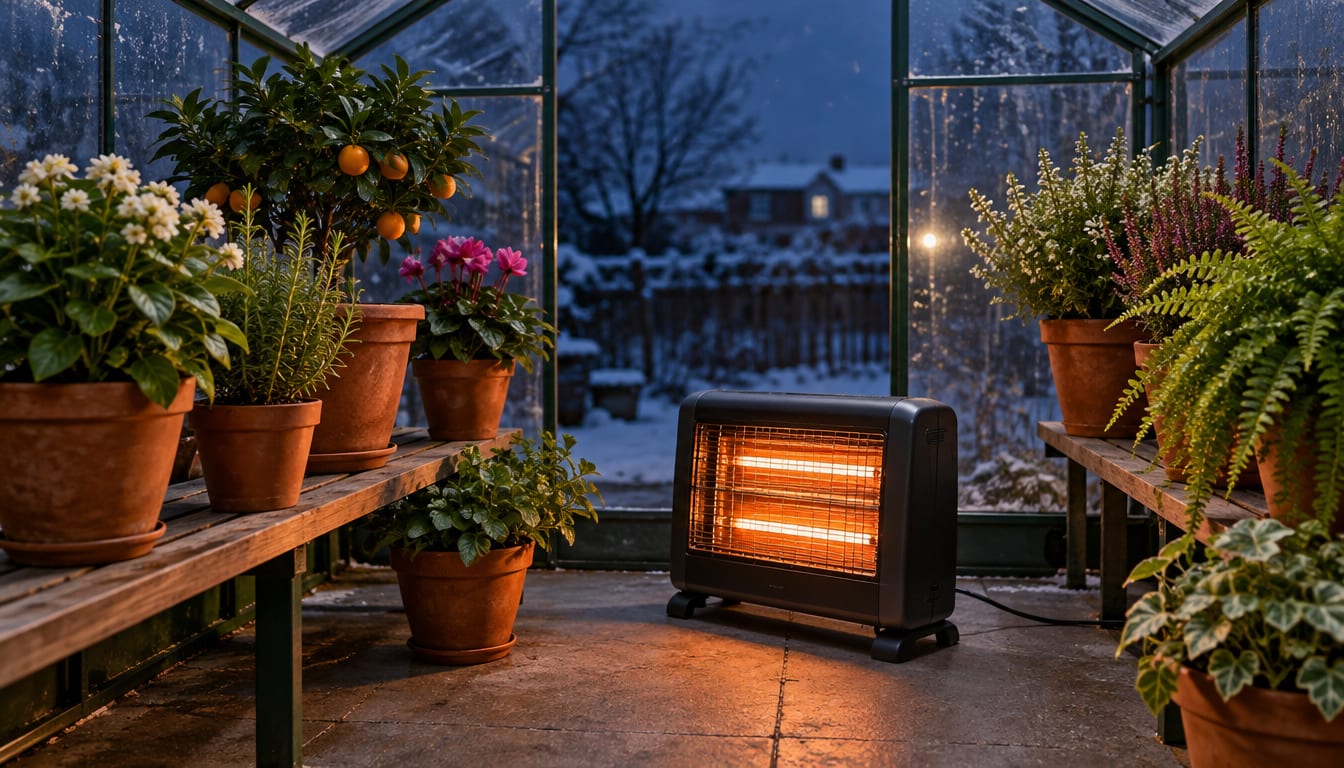
Start by stopping heat loss before you buy heat. Seal gaps around the door and along panel seams, then add horticultural bubble insulation to the north wall and any glazing that gets little sun. These fixes cost little, and every degree you save is one you don't pay to replace all winter.
Next, add a thermostat-controlled electric heater sized for your space and rated for damp conditions. Set it to your crop's minimum and no higher. A heater with a built-in fan also stirs the air, which evens out cold spots and helps with dampness.
Power needs a proper setup. Have a qualified electrician install a weather-rated outlet with ground-fault protection. A permanent extension cord running across a wet lawn is a shortcut you shouldn't take.
When stronger heat is worth it
Holding tender-crop temperatures through a hard winter costs real money, and the bill climbs as the gap between inside and outside grows. It's worth it if you're keeping valuable plants alive or running a serious early-season operation. For most backyard growers, it isn't.
The cheaper path for tomatoes and peppers is to start seeds indoors under lights. Then move them out once your greenhouse nights stay above their minimum without help. Use the heater for frost protection and skip the upgrade to year-round summer.
A cold night can turn into a hot afternoon
The same sealed greenhouse that held warmth overnight can overheat fast once the sun hits it. A small greenhouse has little air volume, so a sunny morning can push the inside past your plants' comfortable range before lunch. This happens in early spring and fall, when nights are cold and days are bright.
Seedlings suffer most. They can wilt or scorch within hours, and a gardener who closed everything the night before may not be home to open it. Temperature management has to cover both ends of the day, which is why the min-max thermometer records the high as well as the low.
Automatic vent openers help here. Most use a wax-filled cylinder that expands as it warms and pushes the vent open, with no electricity required. They're one of the few add-ons that pay for themselves the first time you're stuck at work on a sunny day.
Open vents when the air passes the crop's comfort range
The same extension guidance gives ideal air ranges: 50 to 80°F for cool-season crops and 70 to 85°F for warm-season crops. Use the top of that range as your trigger. When the inside air at plant height nears it, start opening.
- Open the roof vent first. Hot air rises and leaves high, while cooler air enters low.
- Open the door next if the roof vent can't keep up.
- Vent briefly on cool mornings, too. A few minutes of air exchange clears overnight humidity and condensation.
- Close up by mid-afternoon in cold months. This traps the day's warmth before the evening chill.
- Keep drafts off seedlings. A cold blast through an open door can do as much harm as the heat you're venting.
- On windy days, open the side away from the wind. This avoids slamming vents and chilling plants.
Morning venting also matters for disease. Damp, still air is where gray mold and mildew get started.
Shade only when venting can't keep up
Shade is the last cooling tool, because it cuts light all day, including the cool hours when your plants need every bit of it. Reach for it only when the vents and door are wide open and the air at plant height still climbs past your crop's range.
You have three common choices. Shade cloth goes on and off quickly but needs secure fastening against wind. Shading paint or wash coats the glazing for the season, then needs scrubbing off in fall. An old bedsheet thrown over the seedling bench works fine for a single hot afternoon.
Skip shading through winter and most of spring. In those months, low light limits growth more than heat does, and a shaded greenhouse grows weak, stretched plants.
Protect plants on the coldest nights
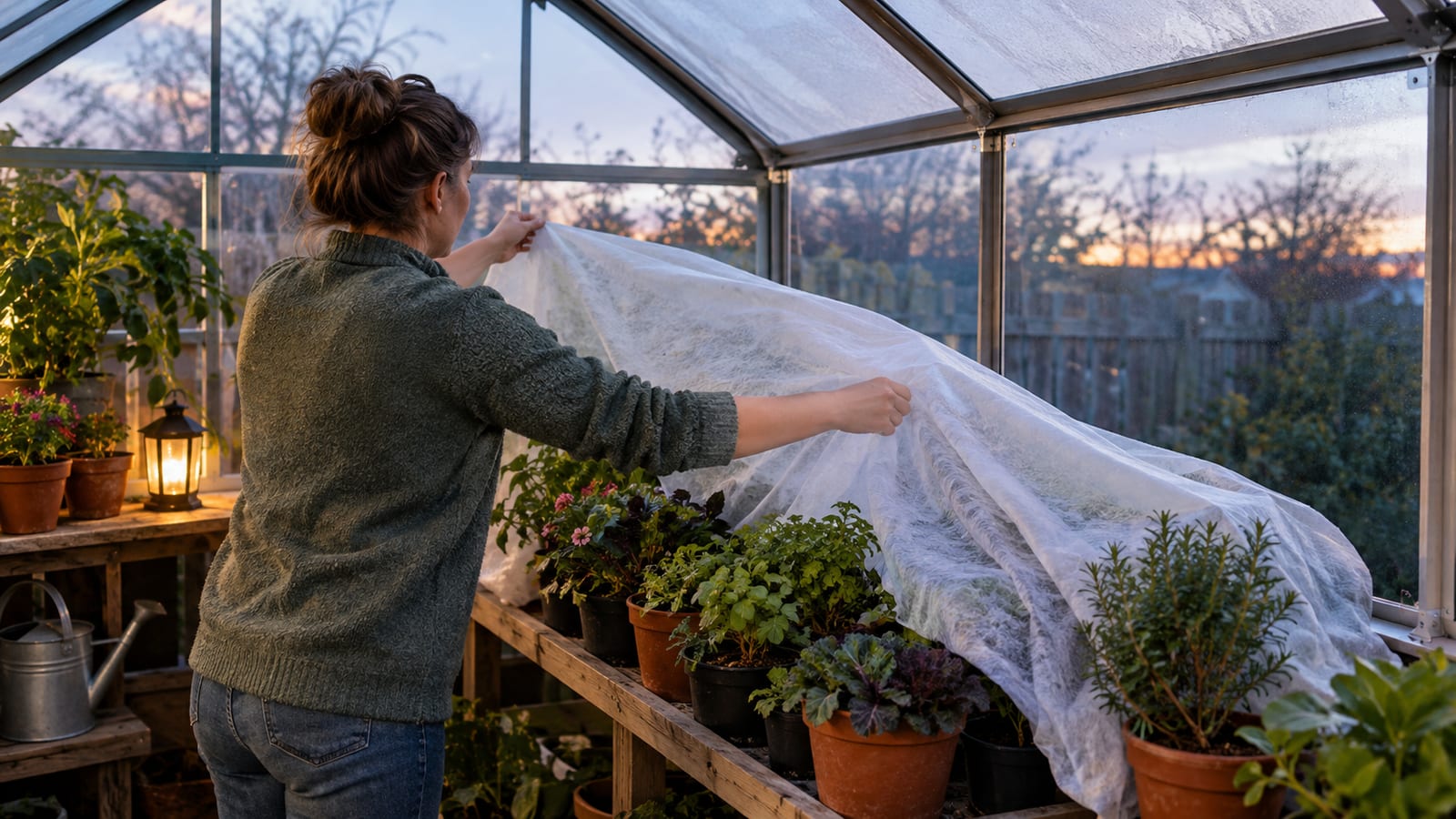
A forecast hard freeze calls for more than a thermostat. Combine these steps:
- Close vents and the door before dusk to trap the day's warmth.
- Insulate exposed glazing, especially on the north side, with bubble insulation.
- Group plants in the center, away from the cold walls.
- Raise pots off the floor onto benches or pallets, where the air is warmer.
- Drape frost fleece over tender plants inside the greenhouse, then remove it in the morning.
- Line the north wall with water containers to store daytime heat.
- Check the heater in daylight so you're not discovering a tripped breaker at midnight.
Frost fleece, also called row cover, is the best value on that list. It holds a pocket of warmer air around the leaves and adds a second layer of protection under the glazing. The trade-off is light, so take it off once the morning warms up.
Know your limits, too. If the forecast drops below what your heater has held before, carry the most valuable tender pots into the house for the night.
Signs the overnight temperature is off
Plants usually show trouble before they die, so check them each morning against your thermometer log.
Too cold:
- Dark, water-soaked patches on leaves, or blackened tips after frost
- Purple undersides on tomato seedlings
- Growth that stalls for days despite sun and water
- Soft, collapsed stems on tender plants
Too warm or too humid:
- Water dripping from the roof every morning
- Gray fuzzy mold, or seedlings toppling at the soil line (damping off)
- Pale, leggy seedlings, a sign of warm nights paired with low light
Too hot by day:
- Wilting at midday that recovers by evening
- Bleached or scorched patches on leaves facing the glazing
- Flowers dropping from tomatoes and peppers
Match the symptom to the reading. Cold injury plus a low overnight reading means more insulation or heat. Mold plus dripping walls means more morning air exchange.
FAQ
Do seedling heat mats replace heating the greenhouse?
No. Heat mats warm the roots and speed germination, but leaves still sit in the night air. For warm-season crops, the Utah guidance puts minimum soil temperature at 60°F and the ideal at 70 to 75°F, so a mat helps reach those soil targets. You still need the air above the crop's minimum.
Is a propane or kerosene heater safe in a small greenhouse?
Only a model built for the purpose, used exactly as its manual directs. Fuel heaters release moisture and combustion gases, including carbon monoxide, so they need a fresh-air supply. Some of those gases can also damage sensitive plants. Install a carbon monoxide alarm if you go this route, and never sleep or work for long in a closed greenhouse with one running.
Can tomato plants survive winter in an unheated greenhouse?
Not in places with regular freezes. Tomatoes are frost-tender, and an unheated structure won't keep them alive through a hard winter. A better plan is to take cuttings in late summer and root them on a sunny windowsill indoors. Then replant in spring.
Should I water before a cold night?
Water in the morning, not the evening. Plants then have the day to take up moisture, and leaves dry off before dark. Wet foliage on a cold night raises the risk of disease and adds to the condensation you'll be venting the next morning.