

Most overheating greenhouses need a way out for hot air more than they need a fan. Learning how to ventilate a greenhouse without electricity comes down to two openings: a high one where hot air leaves and a low one where cooler air comes in. Fit an automatic wax-cylinder opener to a roof vent, add a low louvre or open door on the opposite side, and make the openings big enough for the house you own.
For a small hobby greenhouse, that setup is usually good enough. Add shade netting and the habit of propping the door on hot days before you spend anything on fans or controllers. Three purchases cover most of the job:
| Upgrade | Verdict | What it does for you |
|---|---|---|
| Automatic wax-cylinder roof vent opener | Buy first | Opens the roof vent as the air warms, with no power, batteries, or daily check-ins |
| Low-level louvre vent | Buy second | Lets cooler outside air replace the hot air leaving through the roof |
| Shade netting | Buy before adding more vents | Cuts the heat coming in, so your vents have less to remove |
Start with the smallest greenhouse that fits the crop
Every panel of glazing collects sun, so a bigger greenhouse makes more heat for your vents to dump. Size the house to the job. Seed starting and spring greens fit in a compact kit with one good roof vent. Stretching the season for lettuce, herbs, and a few peppers needs a little more room, but still not much.
Heat-loving summer crops are where ventilation gets hard. Tomatoes and cucumbers want warmth. However, a packed house on a sunny July morning can climb past what they tolerate well before lunch. If summer production is your main goal, plan for extra vent area from day one, because adding vents to a finished kit is fiddly and often leaky.
Height helps too. Extra headroom gives hot air somewhere to collect above the leaves before it escapes. As a result, a taller house with a smaller footprint often stays cooler than a wide, low one with more usable floor space.
How do you ventilate a greenhouse without electricity?
You let warm air rise and leave. Warm air is lighter than cool air, so it floats up to the roof. Open a vent up there and it escapes. That outflow pulls cooler air in through any low opening, and the greenhouse starts breathing on its own.
This is called the stack effect, the same force that draws smoke up a chimney. It gets stronger as the height gap between the low inlet and the high outlet grows. It also gets stronger when the inside is much warmer than outside. That's why a ridge vent beats a vent halfway up the wall.
Wind adds to the effect. A breeze across the roof helps pull air out, while a breeze against a side opening pushes air in. On a hot, still afternoon, though, the stack effect is all you have. So the layout has to work without any help from the weather.
Put one opening high and one opening low
Here's the basic layout. Follow these steps in order:
- Put the exhaust at the top. Use a roof vent as close to the ridge as the frame allows, because that's where the hottest air pools.
- Put the intake low, on the opposite side. A louvre near ground level works, and so does the door. Opposite sides force air across the whole house instead of cutting through one corner.
- Keep the path clear. Don't park a bench, a compost bag, or a row of pots in front of the low louvre.
- Face the intake toward your usual summer breeze if you can. Watch which way the wind comes on warm afternoons before you choose a wall.
- Add a second roof vent before any gadget. If one vent can't keep up, more opening area at the ridge is the cheapest next step.
A door counts as a low inlet, but only while you're home to open it. The louvre covers the hours you aren't. Treat the door as a bonus, not the plan.
Choose a roof vent that opens itself
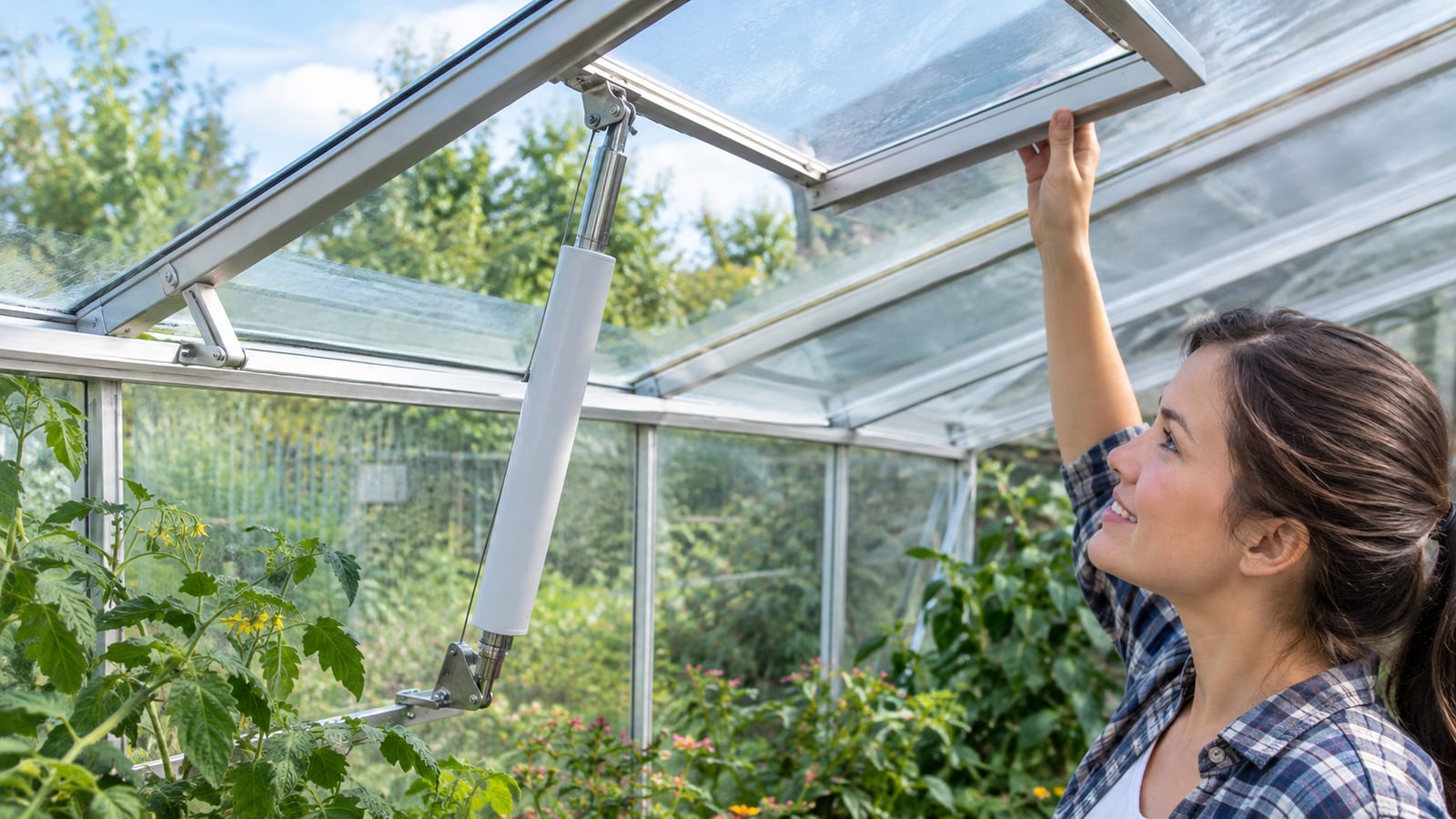
Buy an automatic wax-cylinder opener for the roof vent. For nearly every small greenhouse, it is the first upgrade worth buying. A sealed cylinder holds wax that expands as it warms, pushing a piston that lifts the vent. As the air cools, the wax shrinks and a spring lets the vent settle shut.
Settings vary by model. For example, ANLEOLIFE lists an adjustable setting of 59 to 77°F (15 to 25°C) for the temperature where its opener starts lifting the vent. Raise the setting in early spring so seedlings keep their warmth, then lower it as summer heat arrives. Before you buy, check the manual for the vent weight the arm can lift, since heavy glass needs a stronger unit.
A few gotchas come with these openers:
- They're slow. The wax needs time to respond, so a sudden cloud or cold gust won't close the vent right away.
- Wind can grab an open vent. Fit a stay or short chain so a gust can't fling it past its hinge.
- Winter care differs by model. Some makers suggest removing the cylinder for the cold months. Check the manual.
Hinge position matters as well. One passive solar greenhouse discussion points to roof vents hinged at the top as one option. A top hinge lets the vent lift from its lower edge, so rain tends to run off rather than in.
Manual vents are good enough if someone checks the greenhouse every single morning all season. Skip the upgrade only if that's true. Most people forget once, and once is enough to cook a tray of seedlings.
How big should greenhouse vents be?
Bigger than most kits ship with. Many budget kits come with a single small roof vent that looks fine in the product photo and struggles by midsummer. Total open area is what counts. Also, make the intake at least as large as the exhaust, so the roof vent isn't starved for replacement air.
Several small openings often beat one large one. Two roof vents on either side of the ridge, plus louvres low on both side walls, let air move whichever way the wind blows. Meanwhile, one big vent in the wrong spot can pull hot air from a single corner while the far bench bakes.
Roof openings also steady the airflow when the wind shifts. One study comparing greenhouse styles found that 1-2W and Venlo-type greenhouses were less influenced by wind direction, likely because of their roof openings. Venlo houses are a common commercial design with vents along the roof. A backyard kit is far smaller, yet the same idea applies: ridge vents keep working when the breeze changes direction.
Use doors, louvres, and side vents on hot days
Open the door first. It's the largest low opening you own, and it costs nothing. On a hot, still day the roof vent can't move enough air alone, because there's little wind to help and the stack effect needs a matching inlet.
Next, add crossflow. Open a side vent or louvre on the wall farthest from the door so air sweeps across the benches. Insect mesh or a screen door over the opening keeps out cats, birds, and some pests while you're away.
Respect the wind, too. A door left swinging on a gusty day can tear the hinges out of a lightweight kit. Use a hook or a heavy stop that holds it firmly, and close up when storms are forecast.
In hot, dry regions, wetting the floor in the morning helps. As that water evaporates, it cools the air. Skip it in humid climates, where it adds moisture you'll then have to vent out.
Balance airflow with heat retention
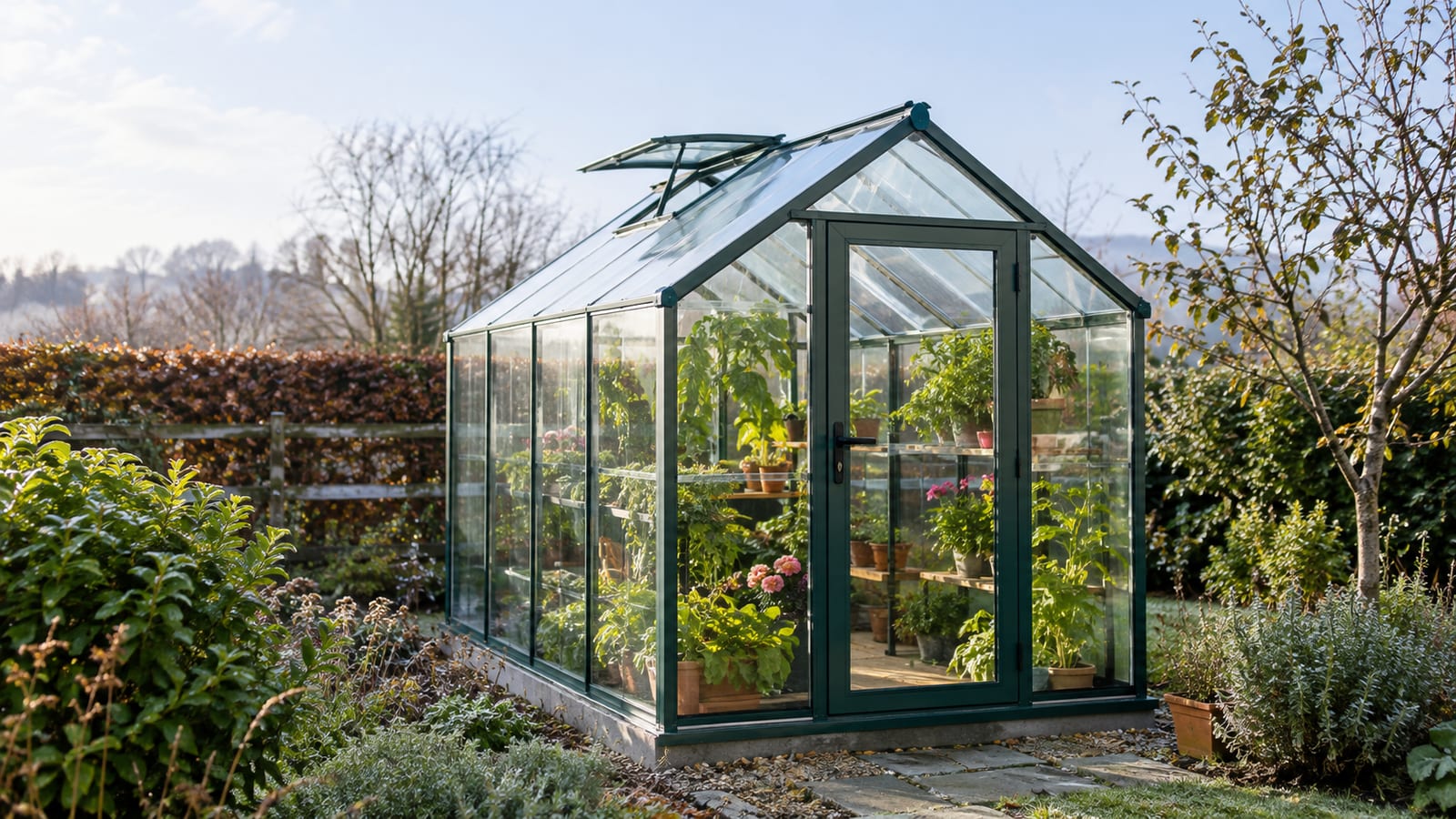
On cool spring days, close the house in mid-afternoon so it stores some warmth for the night. The wax opener helps here, since it closes on its own as the air cools. Still, it reacts slowly, so shut the door yourself before the sun drops.
Keep some air exchange even when nights are chilly. A sealed house traps moisture from soil and leaves, and damp, still air invites mold. Crack the roof vent for an hour around midday on sunny winter days, then close it while the sun is still on the glazing.
Tender seedlings dislike cold drafts. In spring, keep trays away from the low louvre. Alternatively, set them on a bench above it, so incoming air warms a little before it reaches the leaves.
Cut heat gain before adding more vents
Shade netting is the cheaper fix for a greenhouse that runs hot. Every bit of sun you block outside is heat your vents never have to remove. Mount it on the outside of the roof where you can. Inside shading still blocks light, but the heat it absorbs stays trapped under the glazing.
Match the shade to your climate and crop. Leafy greens and seedlings want heavier shade in summer, while tomatoes and peppers need more light to set fruit. Shade cloth is sold in different densities, so buy once for your hottest month and take it down when the sun weakens in fall.
Siting does a lot of quiet work. A deciduous tree that shades the house on summer afternoons and drops its leaves in winter is free cooling. Inside, leave room to work and room for air. Packed benches and a jungle of tomato vines block the path between your low inlet and the roof vent.
Passive heating does not replace ventilation
Thermal mass, like water barrels or a stone floor, soaks up daytime heat and releases it at night. Bubble insulation and a tight door help on the coldest night. All of these make a greenhouse warmer.
None of them removes heat. A wall of water barrels can blunt a hot afternoon a little. However, on a sunny day the extra heat and humidity still need somewhere to go. Thermal mass protects plants from cold, not from overheating.
Passive solar designs need vents as much as any other greenhouse. Often they need more, because they're built to collect sun. If you add thermal mass, plan your vent area for the summer heat it will meet in July.
Manage humidity, condensation, and disease without a fan
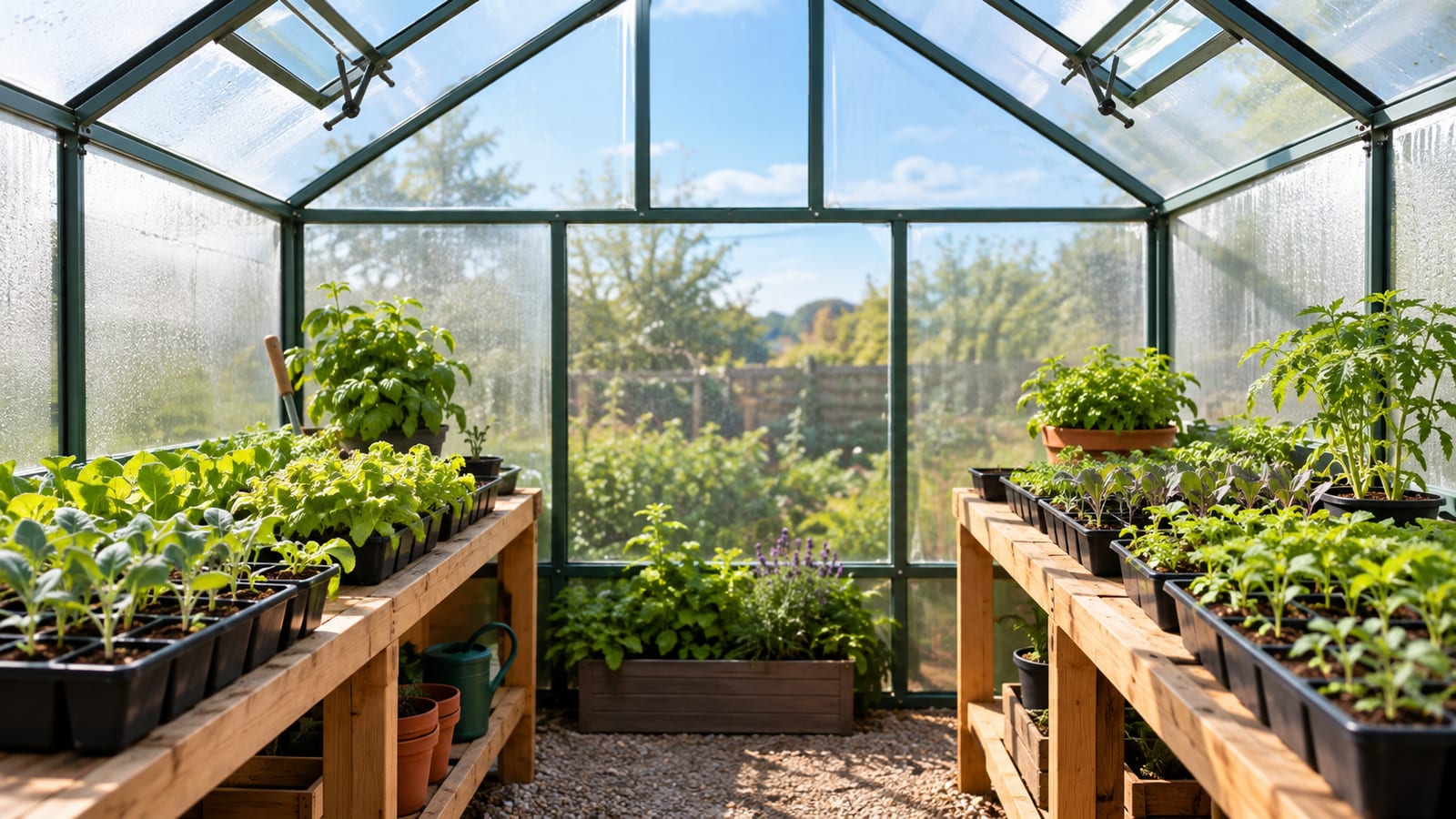
Condensation forms when moist air meets cold glazing. So droplets on the walls at dawn are normal in a closed house. What matters is how fast they clear once you open up.
These habits keep humidity down without power:
- Open early. Morning sun raises humidity fast, so vent within the first hour of direct sun.
- Water the soil in the morning. Wet leaves at nightfall stay wet until dawn.
- Space your plants. Air needs gaps to move through, especially around tomatoes and cucumbers.
- Clear debris. Pick up dead leaves and fallen fruit before mold finds them.
- Watch for warning signs. Gray fuzz on lettuce or tomato stems means the air is staying damp too long.
If water runs down the walls in streams rather than beading, look for a leaking roof panel or a blocked vent first. More air won't fix a leak.
When does passive ventilation stop being enough?
It stops when the temperature at plant height still climbs too high with every vent open, the door propped, and shade in place. A max-min thermometer hung among the leaves tells you without any power. Read it daily for a week of summer weather before you decide.
Some setups hit that limit sooner than others:
- Larger houses packed with summer crops
- Hot desert or humid Southern summers with long, still afternoons
- Sheltered sites boxed in by fences, sheds, or a house wall
At that point, an exhaust fan is the sensible trade-off. Stop stacking more passive add-ons onto a house that can't shed its heat. Have a qualified electrician install a weather-rated connection, and don't run an extension cord across the lawn as a permanent plan.
A simple daily and seasonal ventilation routine
Use this routine through the growing year:
- Each morning, read and reset the max-min thermometer at plant height.
- On sunny days, open the door and low louvres by mid-morning. Fasten the door against gusts.
- Water at soil level early, so leaves dry before evening.
- In late afternoon on cool days, close the door and check that the roof vent has started to settle.
- In early spring, raise the opener's setting and fit insect mesh over openings you plan to leave open.
- In early summer, put up shade netting and lower the opener's setting.
- In fall, take down the shade and clear leaves and cobwebs from the louvres.
- Before winter, secure vents against wind and weather exposure. Follow the manual on removing or protecting the wax cylinder.
FAQ
Is a solar-powered fan worth adding?
It can help a small house on a sheltered site, since it runs hardest when the sun is strongest. Even so, a small panel drives a small fan. Treat it as a helper for good vents, and don't expect it to rescue a house with too little opening area.
Can I add vents to a kit that came with too few?
Usually, yes. Many kit makers sell extra roof vents and louvres sized for their own frames, which fit better than cutting panels yourself. Confirm the part matches your model before ordering, and seal every new joint so rain stays out.
Should I leave the door open overnight in summer?
On warm, calm nights it's fine, as long as mesh keeps animals out and the door is fastened firmly. Close it if the forecast drops toward the low range your crops dislike, or if wind is expected. Seedlings are the first to suffer from a cool draft at dawn.
How do I ventilate a hoop house or polytunnel?
Hoop houses rarely have roof vents, so they rely on roll-up sides and open end doors. Roll the sides up on warm days to get crossflow along the whole length. A vent high in each end wall gives the hot air under the arch an exit.